Monday, May 20, 2013

Blog For Sale - Inquire Within


In case you missed it, Yahoo bought the blog site Tumblr for over a Billion Bucks. You heard that right. See the story here at http://www.oregonlive.com/business/index.ssf/2013/05/yahoo_buys_tumblr_for_11_billi.html#incart_river_default.

A billion dollars for a social media blogging site, while rather amazing, may be reasonable considering the continued popularity of Facebook, Twitter, Pinterest, and more. However, relevancy cannot be bought. Hewlett-Packard tried it to compete with Dell in the early 2000s and now there are rumors that HP will try to buy Dell (we’ll see: http://www.computerdealernews.com/news/is-hp-crazy-enough-to-buy-dell-sadly-probably-not/23107). Microsoft bought Skype in 2011 for a ton (http://www.wired.com/business/2011/05/microsoft-buys-skype-2/); and remember last year when Google bought Motorola for 13-big-ones (http://money.cnn.com/2012/05/22/technology/google-motorola/index.htm).

[In comparison, dropping only a paltry billion for Tumblr is not only “walking around money”, but may be kind of score you expect to see at the Saturday Farmer’s Market]

Here’s the point: the consumer tech industry is in an upheaval.  Whether or not Windows 8 is to blame for the decline in PC sales is debatable (see “Yes”: http://www.extremetech.com/computing/153111-windows-8-causes-most-precipitous-pc-decline-in-history; and “No”: http://mashable.com/2013/04/12/windows-8-pc-sales-woes/), the fact is that PC sales are down is not. I would contend that PC sales are down because the consumer market is – and has been – transitioning to mobile computing in a big way.

Mobile computing has made remarkable gains since the introduction of the iPhone only a few years ago (does anyone remember the Palm Pilot?), and Windows 8 is really only the grand conclusion of this movement. The problem for Microsoft seems to be that they missed the target by about 2 years.

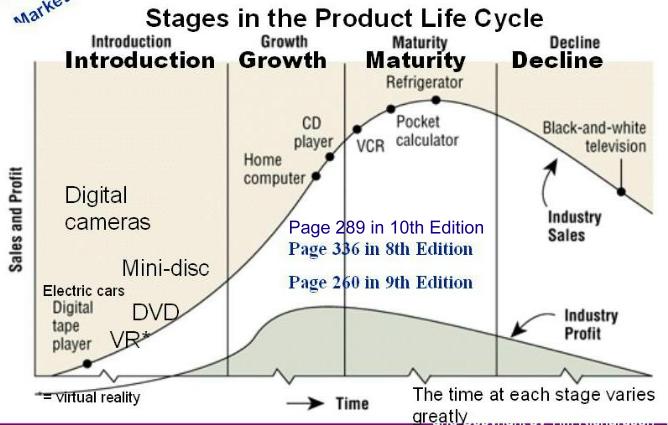
Here’s why. As with any major industry cycle– and we are in the middle of one right now – there will be a transition to Maturity (for an excellent graphic of the Product Development Life Cycle, see: http://www.witiger.com/marketing/plc.jpg). Apple for the most part, spends it’s time in the early stages of the Growth phase with innovation being it’s hallmark. However, even for Apple, it is difficult to stay there (see: http://in.reuters.com/article/2013/04/21/apple-suppliers-idINDEE93K06320130421).
But, the PDLC is a slippery slope. And, once it moves into Maturity, you can’t buy your way back to innovation. PCs are long into Maturity, and mobile devices are getting there quickly.

Instead, watch for a big “shaking out”. We have heard this song before: pending some kind of crazy event or bubble-burst, we should see over the next few years a reorganization of the mobile and social media industries to only a few very large players.

You don’t have to be Nostradamus to see this one coming.

Tuesday, May 14, 2013

Kmart Email Phish?


I received a most interesting email this weekend from “Kmart” as an e-receipt for purchases made at the Salem Kmart. You can register with Kmart to have these receipts sent to your email. It is a nice convenience which we chose last Christmas so that we could track purchases and exchanges. What was troubling was that I was in Salem last week but did not make any purchases anywhere. Additionally, the e-receipt showed the last 4 digits of the credit card and they were not any of mine. Hmm…

Now, there are some interesting analytic software out which can customize spam messages to your location, jobs (based on my .edu domain), and even shopping habits. This is also why you get customized advertising on some sites after doing a particular kind of search.

Additionally, I tracked the destination on some of the hyperlinks and saw a site called kmart.rsys2.net. Interestingly, I found an rsys2.net server in Russia. Ah-ha! Gotcha. So I sent a spam report to Kmart.

It turns out that the e-receipt was indeed authentic. The problem was that when we applied for e-receipts, the data entry person aligned our email with someone else's account. So when they made a legitimate purchase, it was applied to our account. [!]

The moral of the story is: sometimes the hacker you fear most is the data entry person inside your own organization. 

Saturday, April 27, 2013

MHCC CyberSecurity In The News

The MHCC CyberSecurity program is highlighted in an OregonLive.com article along with the Health Informatics and Game Develoment programs. You can see that article here:

http://www.oregonlive.com/portland/index.ssf/2013/04/mt_hood_community_college_resp.html

At the same time is another article talking about how the software industry in the Portland Metro area is exploding. You can see that article here:

http://www.oregonlive.com/silicon-forest/index.ssf/2013/04/oregon_software_employment_is.html#incart_river_default

As we are now in the fifth year of "The Great Recession", it is very encouraging to see that the Information Technology industry remains strong. Even in east Multnomah County, we are seeing a definite increase in internships, job opportunities, and local drives for greater STEM (Science, Technology, Engineering, and Math) development from high schools to the community college to industry.

This is a very good time to be in the technologies.

Thursday, April 18, 2013

The Soul(lessness) of Spammers -- Spamming the Boston Marathon


Well, this did not take long. LiveScience.com is reporting that only hours after the Boston Marathon terror bombing, spammers were hard at working creating spam messages with links promising access to more information which were in fact opportunities to download viruses and Trojans onto unsuspecting users.


Over the years, we have watched the various “Nigerian Scams” seeking your checking account, and seen them morph from various princesses promising millions to missionaries to American soldiers with hidden caches of riches. Some of these messages can be pretty sophisticated and recent advances using analytics can even customize messages specifically for you.

Last winter, I received a message from the “Oregon University” to click on a link for information about a conference that I supposedly asked for. The clue was “Oregon University” and not “University of Oregon”. I researched the link and saw that it sent me to a server with a Russian domain.

Yet, even these seem pretty obvious and if I sat down 100 people and asked each of them to give me their checking account in exchange for the promise of riches, all would say no. And still, FBI Cyber Security agents tell us that most victims of these various scams are in for about $70,000 before they come forward with a complaint.

And, one would think that intelligent, highly educated people could *never* be conned into such an obvious scheme. Right? Well, perhaps not. Check out this recent discovery from the University of Puerto Rico http://www.hispanicallyspeakingnews.com/latino-daily-news/details/university-of-puerto-rico-president-victim-of-scam-school-loses-150000/23322/.

Bottom line: we must all be vigilant because we can all be fooled.  
 

Tuesday, April 9, 2013

North Korean Cyber War?


You already know we are in a Cyber War with N Korea, and there is some chatter about an NK cyber attack tomorrow to coincide with the [suspected] missile [launch/test].

Found a few articles which you may find interesting.
This one is from S Korea and describes the NK CyberWar force at 12,000 "highly skilled hackers"

This one from New Zealand identifies the force at only 3,000 but is concerned that NK will be coming after our credit cards:

(their analysis is a little sketchy and our CCs have been at risk for quite some time, so it's not entirely "news")

Here is an article from HuffPost from last year right after S Korean banks were hit with a cyber attack that caused some problems. The article is written better that you would expect and has some good, entry-level vocabulary. Note the terms "Red Star" and "asymmetrical". You may be seeing more of these in the coming days.

Personal note: I'm not entirely convinced about the "asymmetrical" part. We do have some quality cyber warriors here in the States. Still, apparently their IT people are willing to work (if you can call it "willingness") for only $1,190 per year. 

Bottom line: if you do a Goggle search on the terms "North Korea Cyber Warfare" you will likely get over a million-and-a-half hits. Take a look and get familiar with some of the players and terminology. For anyone interested in Cyber Security, look for words like "DoS attack" or "DDoS attack" or "infrastructure attack" along with the rest. 

One place where the New Zealand article could be accurate is in our critical infrastructure security. Simple things like ATM machines, traffic signals, and even electricity providers are very vulnerable. It would not take a nuclear missile to knock us down -- just turn off the lights for 3 days ---

Be | Informed
Be | Safe


Wednesday, April 3, 2013

Why I Still Like PowerPoint

Recently, I had the opportunity to fly to a conference in Southern California. Like most conferences, there were several break-out sessions and in one, the presenter was preparing the projector and had PowerPoint fired up. Out of habit I looked to the lower right of the screen and saw “Slide 1 of 187”. Groan, I thought, 187 slides for a 2-hour presentation. This will be ghastly. And it was.

Now, I do recall doing lectures with an overhead projector and swapping out “transparencies” or (gasp) writing long hand with a permanent marker on long plastic scrolls; and in comparison, the PowerPoint was a welcome relief. The PowerPoint presentation allowed for nicer presentations with color and font changes, images, videos, and animation. We would say that using PowerPoint “brings our lectures to life.”

What we forgot is that the lecturer needed to be alive first for the presentation to be alive as well. And unfortunately, folks began to use PowerPoint as a sort of crutch to (hopefully) create liveliness where none existed. Where the PowerPoint was supposed to support the presentation, it instead was the focus of it. And in many cases, the PowerPoint became the lecture with the lecturer turned presenter only droning on and on the very words that appeared on the screen (double gasp).

But wait, there’s more.


In our highly media saturated culture, students today are bombarded with massive amounts of light, images, video, and sound – as are we all -- to the point where we are literally in a constant noise. Seriously, check yourself. How long can you or I go with silence before we reach for the smart phone for music or to check messages or to… (you’ve heard this before). So the trap that many have fallen into is the thinking that we have to compete with the noise for your attention so that you will hear the lesson through all of the clatter around you. And the solution is to take PowerPoints and make the highly animated with a lot of color changes, sounds, and more.

A few years ago, I was at an education conference in Baltimore where an instructor was proposing this very thing. His PowerPoint presentation was just LOADED with flashy colors, drastic font changes, video, and very loud music. His point, of course, was to “pierce the veil” of noise that surrounds you and get the message (his lecture) home.

Instead, what I noticed for myself was that the presentation was so loud that I could not track my own thoughts. And then I looked around the room and saw everyone – and I mean everyone – passively watching the show. It’s a phenomenon we call “TV Mode”. Watch for this yourself. It is something that occurs when someone is watching television and they instantly become very passive. Some use it to sedate over-active children. It is amazing to watch. And everyone in the room was in TV Mode.

PowerPoints as a tool


All this said, PowerPoint presentation can be effective if you remember to use it as the tool it was designed to be: a support of the presentation and not the presentation itself. To poorly coin a phrase, “PowerPoints don’t bore people; people bore people.”

There are some good PowerPoint presentations, and I have seen many that support textbooks and do it well. Because of the limited format of the slide and the amount of information you can reasonable put on it, the PPT presentation can perfectly become the synopsis of the most important information derived from the chapter. For the student, the PPTs become the instant study-guide for any class. When you are short on time during the week, you can make a quick breeze through the PowerPoints and you will have the gist of the lecture.

In my own studies, I like to have the PowerPoints open while I am reading the text. This “following along” helps me to identify the information that the author thought was most important; thus providing me a greater efficiency in the lesson.

PowerPoints are still an effective tool for any good presentation. We just need to remember that they are here to support us and not the other way around.

Wednesday, June 6, 2012

It’s finals week and while some are anticipating graduation others are looking towards the next school year. This is always a very exciting time.

While it is appropriate for us to pay attention to our short-term projects, it is also a good practice to remember what we are working for. US News and World Report recently published an article entitled “The 6 Hottest Tech Careers of 2012” (http://money.usnews.com/money/careers/articles/2012/04/05/the-6-hottest-tech-careers-of-2012?s_cid=rss:the-6-hottest-tech-careers-of-2012). It is a good read.

The best part of this article is that it highlights many of the programs that we currently run here at MHCC including Database and Web Design and Systems Analysis. These are and continue to be strong careers for IT-minded people.

More telling is this very interesting list called “2012 Best Computer Careers Comparisons and Reviews” (http://computer-careers-review.toptenreviews.com/). Here you will see not only a ranking of the top computer careers, but also a matrix containing average salary projections, job availability, and advancement potential. You can know which IT jobs are HOT.

Do notice that in the top 10, you will see careers for which we train right here at MHCC and especially in Network Security (#4), Network Administration (#5), Database Administration (#6), Health Informatics (#7), Tech Support (#8), and Web Design & Web Mastery (#9 & #10).
Why is this significant? Because at MHCC, we want you to know that it is our commitment to always deliver the most relevant training that will provide you with the greatest opportunity for an excellent career that is rewarding and fulfilling.